
Pod Talk
a communiqué for connecting all involved in the Pēpi-Pod® programme
by Stephanie Cowan
The power of collective intelligence and a shared purpose.
Tēnā koutou
Recently I have found myself immersed in the language of academic papers and policy guides: technically accurate, journal-appropriate, and widely accepted ways of thinking about SUDI prevention and prevention in general. Harm minimisation. Exposure elimination. Risk reduction. Terms familiar to you, I am sure, but ones that made me pause to reflect on why they jar for me.
When the language of research drifts into health policy and practice guidelines it can also drift into how we think about care and intervention. However, Practice and Research do not always serve the same purpose. What is precise in a journal does not always translate into useful thinking about protection in homes.
Then an email arrived that made me smile.
A woman wrote
“… I have been given back a Pēpi-Pod that I'd passed on to another mum. This will be my third baby to use the same Pēpi-Pod, which already feels special, let alone the other two that have used it in between. I'm really glad that the safe sleeping information that came with the Pēpi-Pod when I first got it, is still with it! This is baby number four and it's still good to have a refresher. …”
I smiled because it showed something so clear. Protection was visible not in less harm, less risk, less exposure, but in what we can easily see: use of the little bed, sharing it with friends, valuing the opportunity and the knowledge that travelled with it, caring relationships reflecting trust and respect, and all the other conditions from policy to biology that make these things possible in time and place.
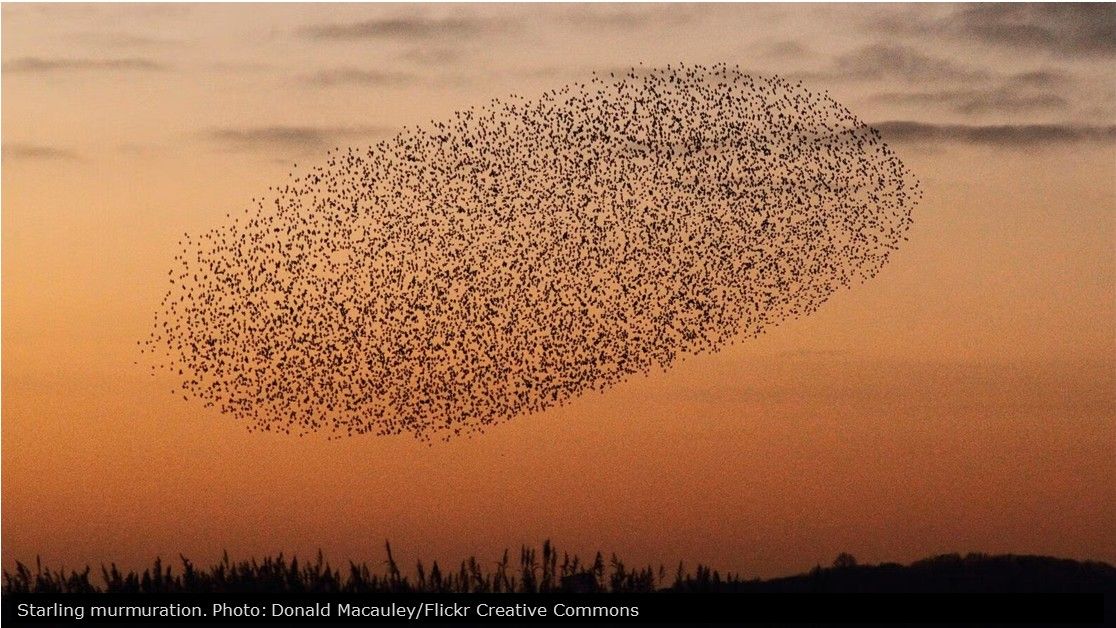
This is a beautiful example of what protection looks like in Practice. As swirling shapes emerge in the evening sky from a murmuration of starlings flying together yet alone, their movement is not directed by a single leader bird. Instead, it is governed collectively, protected by responsive relationships to the birds close by and the common purpose of safety. So, too, SUDI prevention emerges from interconnected conditions across society—some conditions critical, others strengthening or weakening, but all contributing.
Research asks: ‘Is this intervention effective?’ Practice asks: ‘Is this baby protected?’ Different questions for different purposes; different language needed and different ways of thinking.
We may think of protection as if it sits inside an intervention, something a wahakura or Pēpi-Pod or breastfeeding does; something that is delivered, applied, or provided. But what if we think of it as emerging through a set of connected conditions—biological, social, material, relational, political—coming together in time and place? How might that change what we notice, reflect, discuss, ask? How might it support us to leave each baby with something strengthened in the conditions that surround them, such as a carer’s understanding of priority, opportunity to relieve exhaustion, or acknowledgement of their considerate care?
A baby experiences protection as having their needs reliably noticed and met – fed when hungry, calmed when dysregulated, held when needing comfort, rest after stimulation, carers close by, read and sung to, nicotine-free, easy to breathe when sleeping. When these surrounding conditions are strong, we protect not just a physical space, but a future.
Like starlings, we don’t need a single agency, intervention or directive to dictate our movements. Instead, guided by our collective intelligence and driven entirely by our shared purpose, let's fly together as a swarm of protection for our pēpi. There is more to our work than the sum of its parts; from it, protection will emerge when we all carry the Practice question, “Is this baby protected?”. The question changes our thinking, language, and actions so that, rather than looking for the absence of risk, we notice and strengthen the presence of care across the system.
It is a truth beautifully captured by the late Whaea Terehia Kipa of Ngāi Tahu, who gave this whakataukī to our work in change for our children:
“Atawhaitia ahau i roto moemoeā — From my earliest beginnings, pursue protection so that I may dream.”
Mā te wā, Stephanie
Pod Talk Comment - Blog Post
Pod Talk